Wendy Long · 4 October 2026
Shifts in Visitor Behavior Following Infrastructure Updates in Peer-Led Web Environments
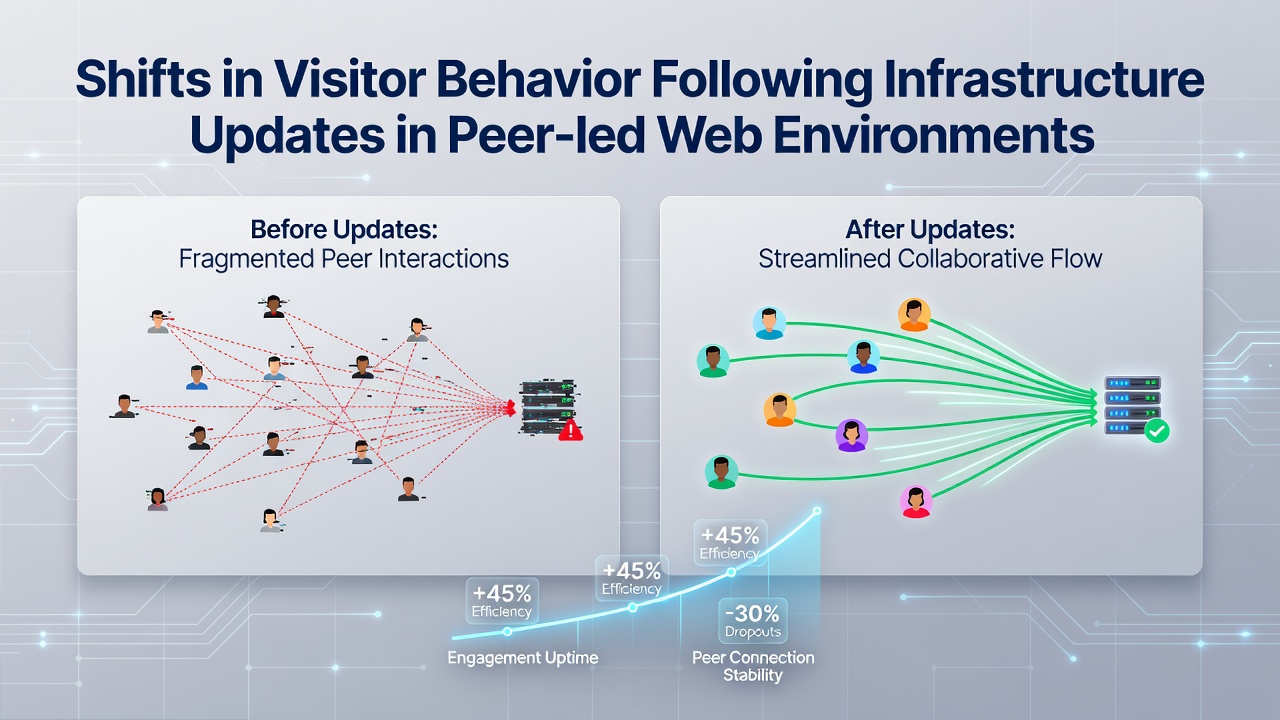
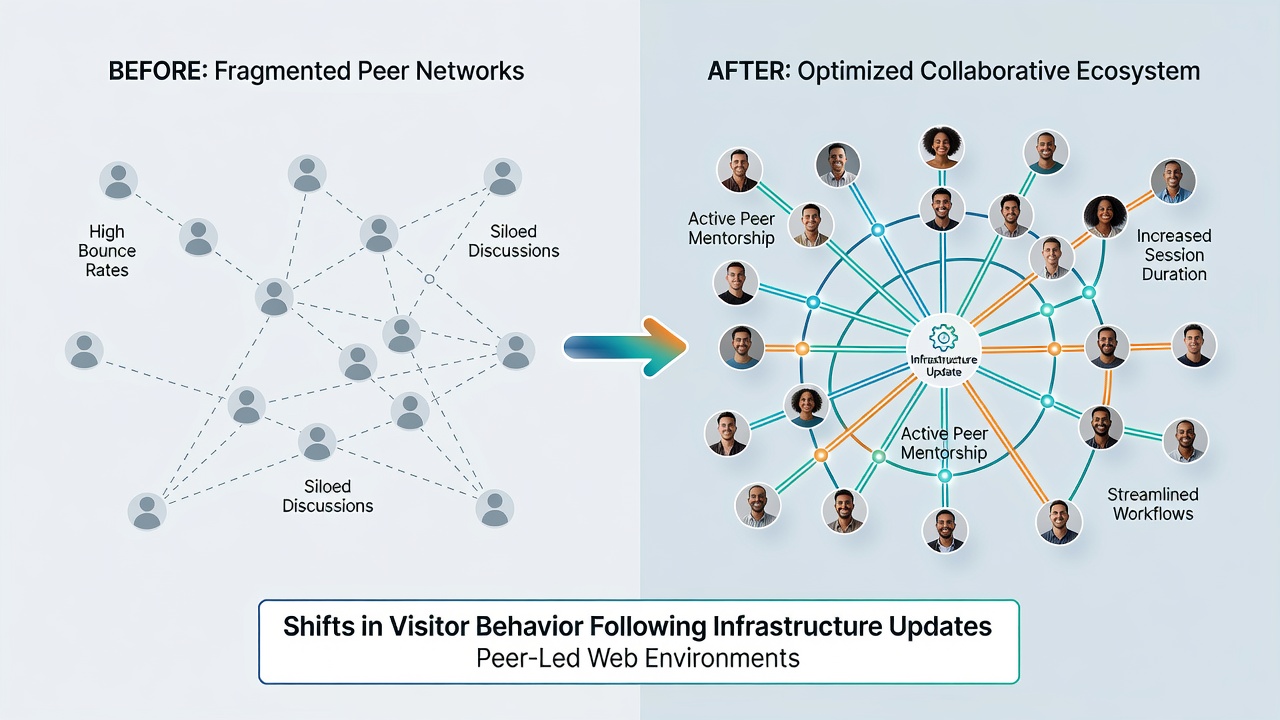
Peer-led web environments consist of decentralized platforms where users contribute to moderation, content creation, and governance, and these spaces have undergone repeated infrastructure changes that alter how visitors interact over time. Researchers tracking activity logs in such networks note that updates to servers, content delivery systems, and user interfaces often coincide with measurable changes in session duration, page navigation patterns, and return visit frequency. Data collected across multiple independent forums and collaborative sites shows that faster load times after hardware refreshes lead to increased exploration of archived threads, whereas redesigns focused on mobile responsiveness shift participation toward shorter but more frequent check-ins.
Infrastructure Components Commonly Updated
Updates typically target backend databases, caching layers, and frontend frameworks that support peer contributions without central oversight. When administrators implement new content distribution networks or upgrade encryption protocols, visitors encounter reduced latency during peak hours and smoother transitions between discussion threads. Observers note that these technical adjustments affect search functionality within the platform, which in turn influences how new users locate older posts contributed by long-term community members. In October 2026, several peer-managed repositories reported completion of distributed storage migrations that allowed concurrent editing by larger groups, and access statistics from those periods reveal elevated rates of simultaneous logins compared with prior quarters.
Patterns in Navigation and Engagement
Visitors respond to infrastructure improvements by altering their browsing sequences, often moving from single-page sessions to multi-page traversals once stability increases. Studies of access patterns indicate that enhanced search indexing prompts users to follow cross-references between related topics, expanding the scope of each visit. Those who manage peer-led sites have documented rises in comment thread depth after bandwidth expansions, because participants encounter fewer interruptions during real-time exchanges. Yet the same upgrades sometimes reduce the visibility of older static pages if navigation menus receive reorganization, leading to temporary drops in traffic to legacy content until community members create updated linking structures.
Regional and Demographic Variations
Behavior shifts appear differently across geographic regions because network infrastructure quality varies and affects how visitors experience the same platform updates. Reports compiled by the OECD digital economy group highlight that users in areas with established high-speed connections increase their contribution rates following software optimizations, while participants relying on variable mobile networks show steadier but less interactive patterns. Academic analyses from institutions such as the University of Melbourne further indicate that age demographics influence adaptation speed, with younger cohorts demonstrating quicker adoption of new interface elements introduced during updates. These variations compound when platforms introduce features like real-time notifications or collaborative editing tools that depend on the underlying server capacity.
Measurement Approaches Used by Platform Operators
Operators of peer-led environments rely on aggregated log analysis and voluntary user surveys to quantify behavioral changes without compromising anonymity standards. Metrics such as average pages per session and referral source distribution provide indicators of whether an infrastructure change has expanded reach or concentrated activity within established user groups. Evidence from longitudinal tracking shows that database optimizations frequently correlate with higher retention of first-time visitors, because reduced error rates during registration processes encourage continued exploration. When external analytics tools receive integration after an update cycle, community moderators gain clearer views of traffic spikes tied to specific feature rollouts rather than external events.
Long-Term Effects on Content Contribution
Over extended periods, infrastructure stability supports sustained content growth because contributors encounter fewer technical barriers to uploading or revising material. Peer networks that completed major migrations to containerized hosting environments recorded gradual increases in multimedia posts once storage limits expanded. Those managing such sites observe that visitors who previously limited activity to reading begin submitting edits once search adn version control features become more responsive. Data from collaborative wikis demonstrates that edit frequency rises in the months following API enhancements, because third-party tools integrate more reliably with the core system.
Conclusion
Infrastructure updates in peer-led web environments produce documented shifts in visitor behavior through changes in navigation depth, session frequency, and contribution volume. Tracking efforts by research organizations and platform operators continue to supply evidence that these modifications interact with regional connectivity levels and demographic factors to shape engagement outcomes. Continued monitoring of access patterns offers insight into how future technical adjustments may influence community dynamics across decentralized online spaces.