
Yara Werner · 1 November 2026
Inside Volunteer-Run Server Maintenance: Tracking Resource Allocation Shifts in Niche Digital Hubs
Volunteer teams keep niche digital hubs operational through structured maintenance routines that monitor server loads and reallocate processing power as community activity changes over time, and data from platform logs shows consistent patterns in how resources move between storage, bandwidth, and compute tasks during peak periods.
Core Maintenance Practices in Volunteer Settings
Teams document daily server health checks that cover CPU utilization, memory allocation, and disk I/O rates while they log every adjustment in shared tracking sheets, and this approach allows groups to identify when traffic spikes require temporary boosts to virtual machine instances without external paid support.
Many collectives run open-source monitoring tools that export metrics to centralized dashboards, yet the real work happens during weekly review meetings where volunteers cross-reference those numbers against user engagement reports to decide on reallocations.
Resource Allocation Tracking Methods
Allocation shifts become visible when teams compare baseline usage data collected over consecutive months with current snapshots, and researchers at the Australian National University have published findings on similar peer-managed systems that reveal how bandwidth pools often expand during content upload surges while compute resources contract during archival phases.
One common technique involves tagging individual services with priority levels so that automated scripts can shift resources dynamically when thresholds are crossed, while manual overrides remain available for volunteers who notice anomalies during off-peak hours.
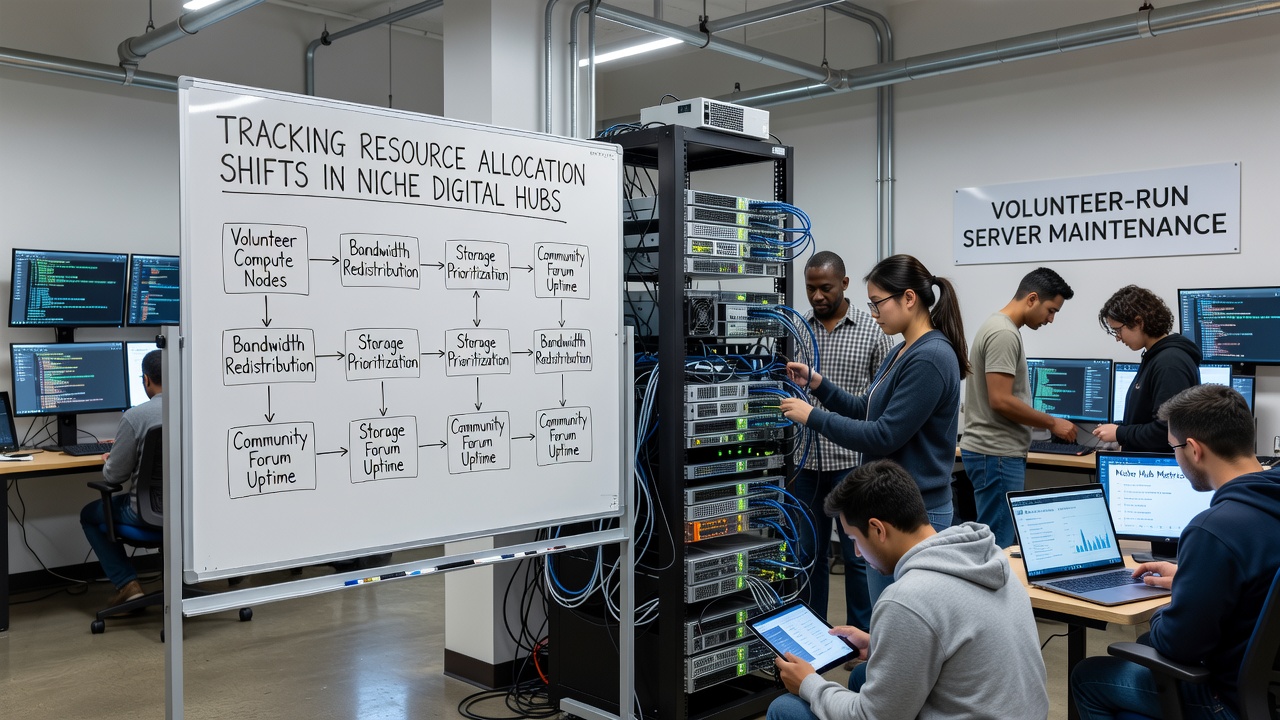
Shifts Observed Across Niche Communities
Activity logs from multiple hubs indicate that resource demands in creative forums often migrate toward higher storage needs as user-generated archives grow, whereas discussion-focused platforms show more frequent bandwidth reallocations during live events, and these patterns held steady into November 2026 according to aggregated reports from distributed network operators.
Teams have noted that seasonal events trigger predictable reallocations, such as increased memory pools for media rendering during community challenges, and the process relies on version-controlled configuration files that allow quick rollbacks if a shift produces instability.
Tools and Documentation Standards
Documentation follows templates developed by groups like the Internet Society that emphasize timestamped entries for every change, and this creates searchable records that new volunteers can review to understand prior allocation decisions without needing direct handover sessions.
Integration with external APIs from hosting providers supplies additional context on power consumption and network latency, helping teams balance performance against available volunteer time for deeper troubleshooting.
Conclusion
Resource allocation tracking in volunteer-run environments depends on consistent logging combined with flexible response protocols that adapt to measured shifts, and continued refinement of these methods supports the ongoing stability of niche digital hubs as usage patterns evolve through 2026 and beyond.